E&ES 359 Climate Change TTR 10:30-11:50AM ESC 405 Johan C. Varekamp
Climate change is common to this earth – we have known ice ages and hyper thermals, snowball earth and who knows what is in store for us for the rest of this century. We will study the way in which the climate machine works, some effort will be made to study paleo climate indicators, and we will put a large effort in studying the current period of global climate change that may be human-activity driven. The role of CO2 in earth processes is very large relative to the modest quantities of it that are present in the atmosphere. We will therefore study many aspects of the physics, chemistry and biology of CO2 and carry out several projects that relate to CO2. In addition, we will look into the role of methane as a modifier of climate and catastrophic methane releases as a feedback to incipient warming. Several questions regarding CO2 will be addressed:
- Is CO2 cycling the “thermostat of the earth”?
- What is the role of CO2 in global climate (greenhouse gas)?
- How does photosynthesis works?
- How does CO2 acidify surface waters and promote weathering?
- How much CO2 is there on other planets?
- How has atmospheric CO2 varied over the course of earth history?
- What should we do to prevent further global warming - the Kyoto treaty
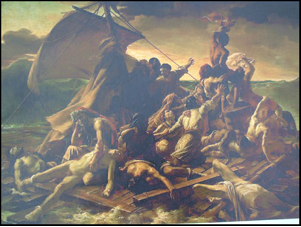
The course is a mixture of lectures, with handouts and a bookchapters (Greenhouse Puzzles, by Wally Broecker) and student-run experiments that deal with climate and the Carbon cycle on earth. We will also sidestep to the link between art and climate, ranging from the color choices that landscape painters make to provide a climate sense to the historical painting record that portrays the changes in climate through dress, landscape and skies. We will visit the studio of a landscape painter in NYC. There is a midterm exam on the lectures (50%) and project reports that transition into term papers and class presentations at the end (50%). The class participants need initiative and a certain self-reliance to make it a rewarding and successful experience.
There probably will be ~ 25-30 students in the class, with 5-6 projects over 2/3 of the semester. The projects have sign-up sheets and ultimately 5 students per group will be selected by me after reading the preferences and qualifications. The projects are:
- AEM - Analog Earth Model – a model, designed and built at the Wesleyan University workshop, of the earth inside a water cooled box (=the universe). Visible light illuminates the ‘black sphere earth’, which radiates IRR that is then carried off by the water-cooled walls of the cell. The box can be filled with Ar (radiatively neutral gas), CO2 (greenhouse gas) or mixtures thereof, and temperature sensors will register the effect of adding the greenhouse gas. Experiments and calculations are carried out by the AEM group to simulate the terrestrial greenhouse effect in this analog matter. Requirements: capability to collaborate, good quantitative skills, interest in Physics (radiation) and love of fiddling with instruments (and patience). This is a totally novel and never tried experiment!!
- GGA - Greenhouse gas absorption of IRR – The group builds an IRR absorption spectrometer from bits and pieces already acquired on ebay. The goal is to measure the wavelength-integrated absorption of IRR by CO2 through measurements with different CO2 concentrations and different pathlengths. These measurements can then be used to estimate the ‘blocking power’ of CO2 gas in the natural atmosphere through extrapolation to natural conditions. Requirements: capability to collaborate, good quantitative skills, interest in Physics (radiation) and love of fiddling with instruments (and patience). This is a novel experiment!!
- MAC - Middletown Air CO2 – The concentration of CO2 in the atmosphere increases as a result of anthropogenic CO2 releases as well as natural processes. What is the magnitude of CO2 concentration variations in the Wesleyan University outside air over a semester? We drilled a hole through a windowsill at the 4th floor of the ESC and set up an instrument that samples the air and analyzes it for CO2 every 0.5 hour for most of the semester. This project is interrupted every time the CO2 analyzer is needed for the other projects, so the record consists of a time series with ‘holes’ in it. Data storage, plotting and treatment is an important part and models will be created to explain the observed patterns. The MAC group may ask the local firestation to use their ladder wagon to create a detailed atmospheric CO2 profile along the highest ladder during two time periods in a day. Requirements: interest in analysis of gases, data plotting, creative thinking.
- CIW – CO2 into Water – Atmospheric CO2 dissolves into water through gas exchange reactions. The increases in atmospheric CO2 are partially buffered by the uptake of CO2 in surface waters, mainly the oceans. The kinetics of CO2 uptake in fresh water and seawater can be experimentally determined in a gas dissolution cell, which we have already built. The CIW group will carry out experiments in freshwater and in seawater, through gas dissolution in static water and in stirred water (4 experiments in total). The obtained data will be plotted and modeled, and compared with experimental results from others as well as experiments in nature (e.g., rate of loss of atmospheric bomb 14C to the oceans). Requirements: Interest in physical chemistry and detailed experimentation, and scaling of models.
- CIP –CO2 into Plants – Plants absorb atmospheric CO2 through photosynthesis, and it is well known that the rate of photosynthesis increases with raised atmospheric CO2 levels. The CIP group will carry out plant growth experiments in growthchambers under different temperature, CO2 and humidity conditions (chambers courtesy to Dana Royer). Models will be used to scale the results up to the terrestrial biosphere and atmosphere. Requirements: Interest in plant physiology and biology, experimentation and model scaling.
- CMCC - Computer Models of Climate Change – The response of climate on changes in greenhouse gas concentrations can be modelled through box modeling and computer climate simulations. This can be extended by incorporating the ‘human’ component and entering human consumption patterns and choices into the box models. Simple programs already exist and will be re-written for zero dimensional climate models to simulate the various CO2-options, with ground-truthing of the model on data of the last 100 years. Results may be compared with externally acquired climate simulations. Requirements: Interest in computer modeling, ability to generalize from very detailed data sets to useful expresions, some insight in economics
- CTPST
– Carbon Trading Policies and Sequestration Technologies
Cutbacks in anthropogenic CO2 emissions can be made through technological advances in the western world (e.g., CO2 sequestration) as well as exchange of technology with lesser developed nations. ‘Carbon trading’ is another approach to limit net CO2 fluxes into the atmosphere (e.g., planting trees in Costa Rica).
The class has a small budget to acquire necessary items but most are already available. The group spirit should be high and everyone should pitch in – no slackers dumping work on others! Experiments are done in room ESC 413 (back of Hg lab) and the class meets in ESC 405. When successful, outreach efforts to local schools and colleges are encouraged.
Syllabus
January
24 Venus is hot, Mars is cold, and what about Earth? Papers
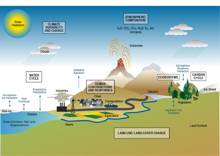
29 The modern earth climate: principles of radiative equilibrium - handouts
31 The greenhouse effect – principles – handouts
February
5 More greenhouse discussions
7 First Experiments meetings (I am out of town)
12 CO2 and long term climate change - the thermostat of the earth – papers
14 Chemical Indicators of climate change - Stable Isotopes - papers
19 Chemical Indicators of climate change - Radiogenic isotopes - papers
 21 Climate
and Art
21 Climate
and Art
26 Second Experiments meeting (I am out of town)
28 Climate and Art
March
4 The short C cycle
6 Carbonate chemistry in the oceans
25 Biological processes, photosynthesis
27 14C as a tool in climate studies
April
1 Other carbon forms and their cycles (methane, CO)
3 Volcanoes and climate
8 Historical changes in climate – little ice age, medieval warm period
10 Modern and historic anthropogenic carbon releases
15 Reducing the anthropogenic carbon releases – Kyoto treaty - Bali
17 Climate change and society – Mitigation or adaptation?
22 CO2 disposal and atmospheric clean-up
24 Future climate: models, potential effects
29 Project presentations 1+2
May
1 Project presentations 3+4
6 Project presentations 5+6